Soundscapes Interactive Exhibit
Exhibit idea for a science museum.
Overview
Sound waves are having an identity crisis. Well, not exactly. But they are commonly misunderstood. If you asked someone to draw a sound wave, you might get lucky and see a scatter of dots, with parallel bands where the dots are more concentrated. But more likely, you'll get a simple squiggly line. These two representation are visually dissimilar. So why do we vary so much about what a sound wave looks like?
I created an exhibit that questions the assumption about what the squiggly line means, and helps people more easily visualize the dots drawing.
Roles
3D Modelling, Research
Team
Individual, concept
Understanding Sound Waves
Sound waves are often represented by transverse waves, the squiggly waves that seem to move up and down like ocean waves. However, sound waves are longitudinal waves— where particles move parallel to the wave's motion, as opposed to perpendicular which creates the crests and troughs of the transverse wave. The longitudinal wave makes the particles look like they bunch up.
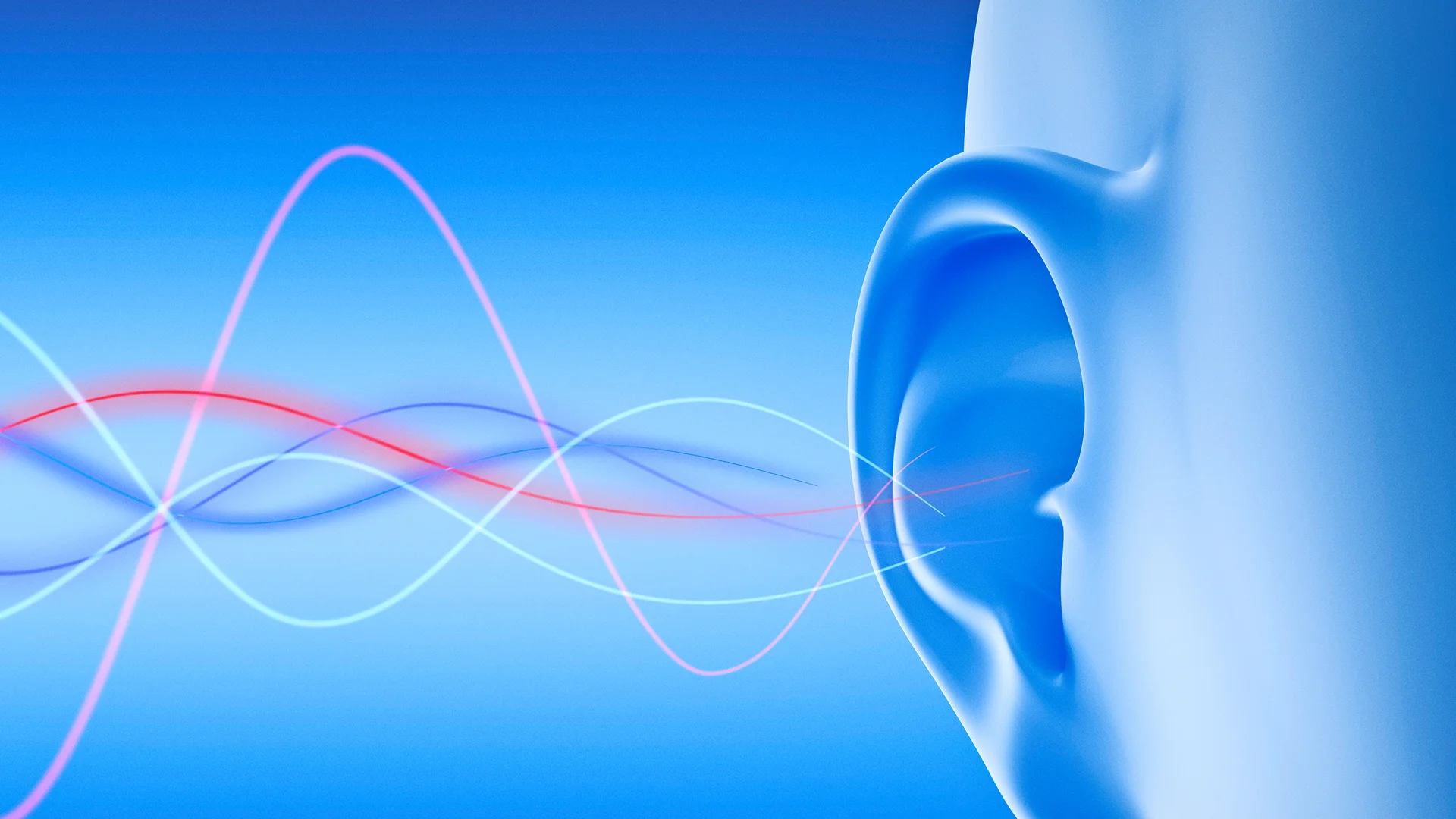
Common sound wave representation
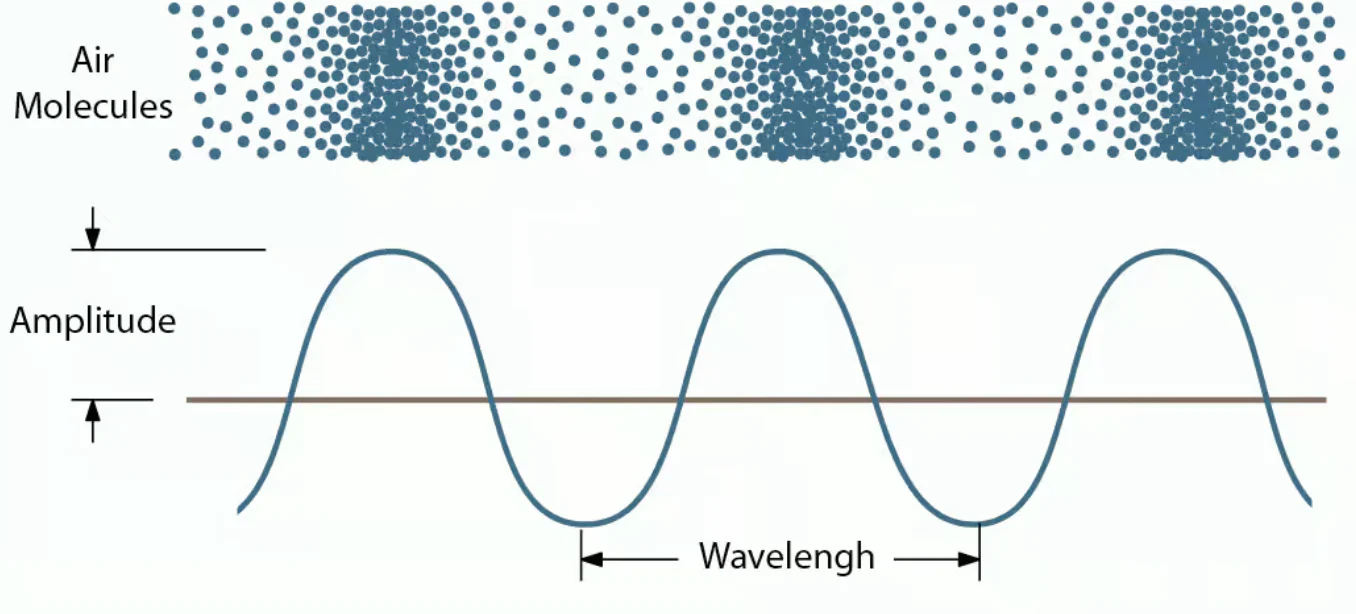
Sound waves can still be represented as transverse waves, like in the diagram to the left. However, when used alone they can create confusion about what they're actually representing. Rather than being an actual representation of the path an air particle takes to reach your ear, it shows repeated particle displacement over time.
Moodboard
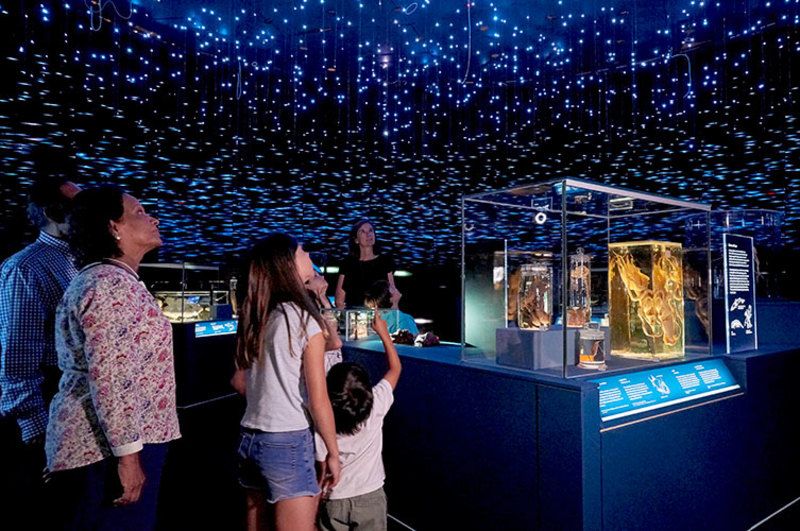
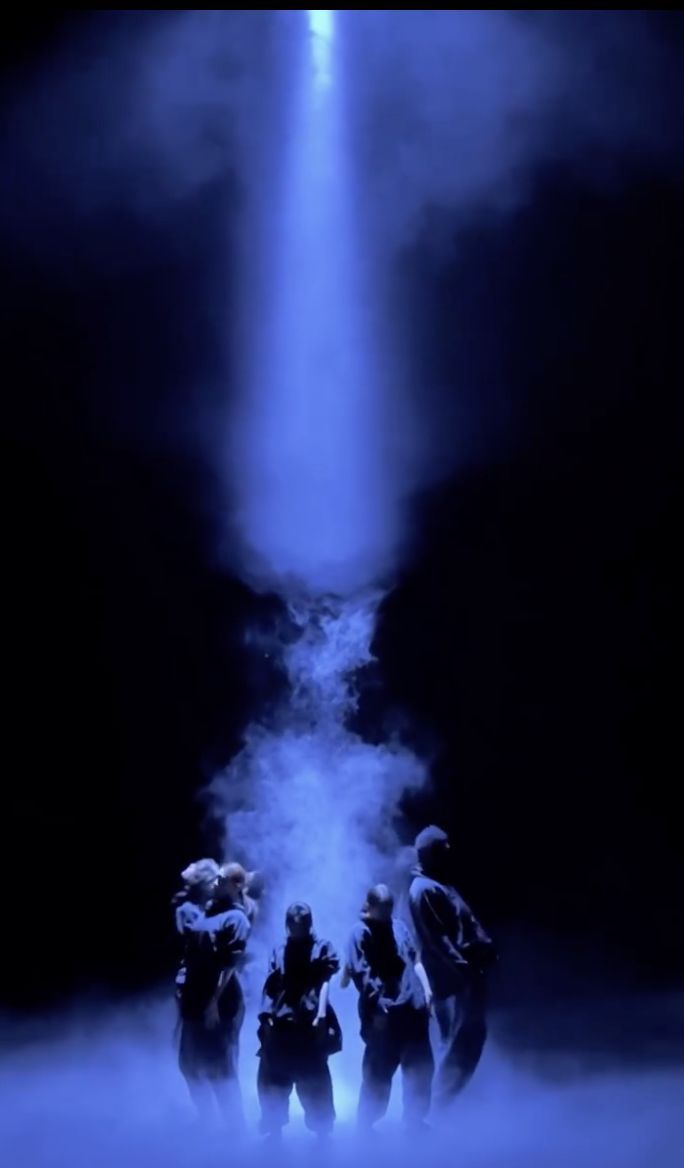
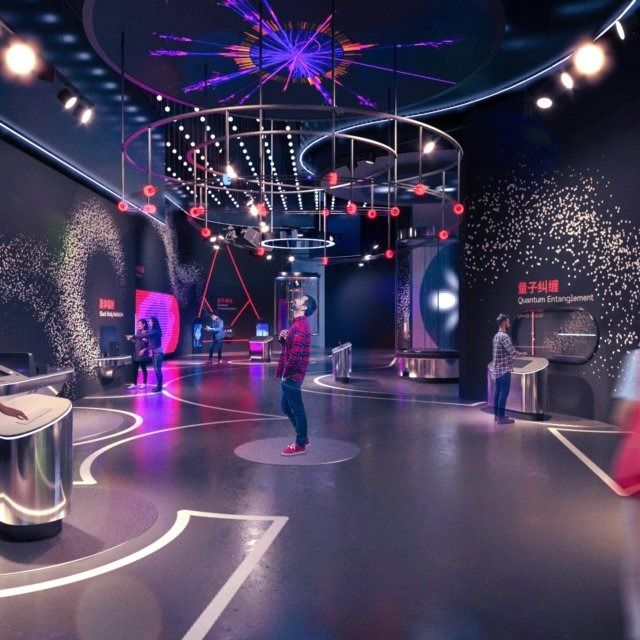
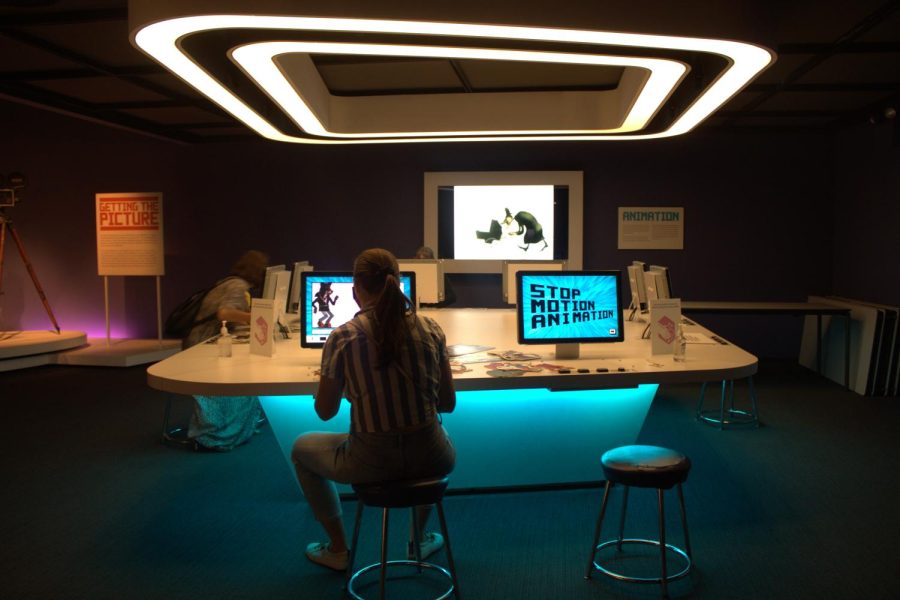
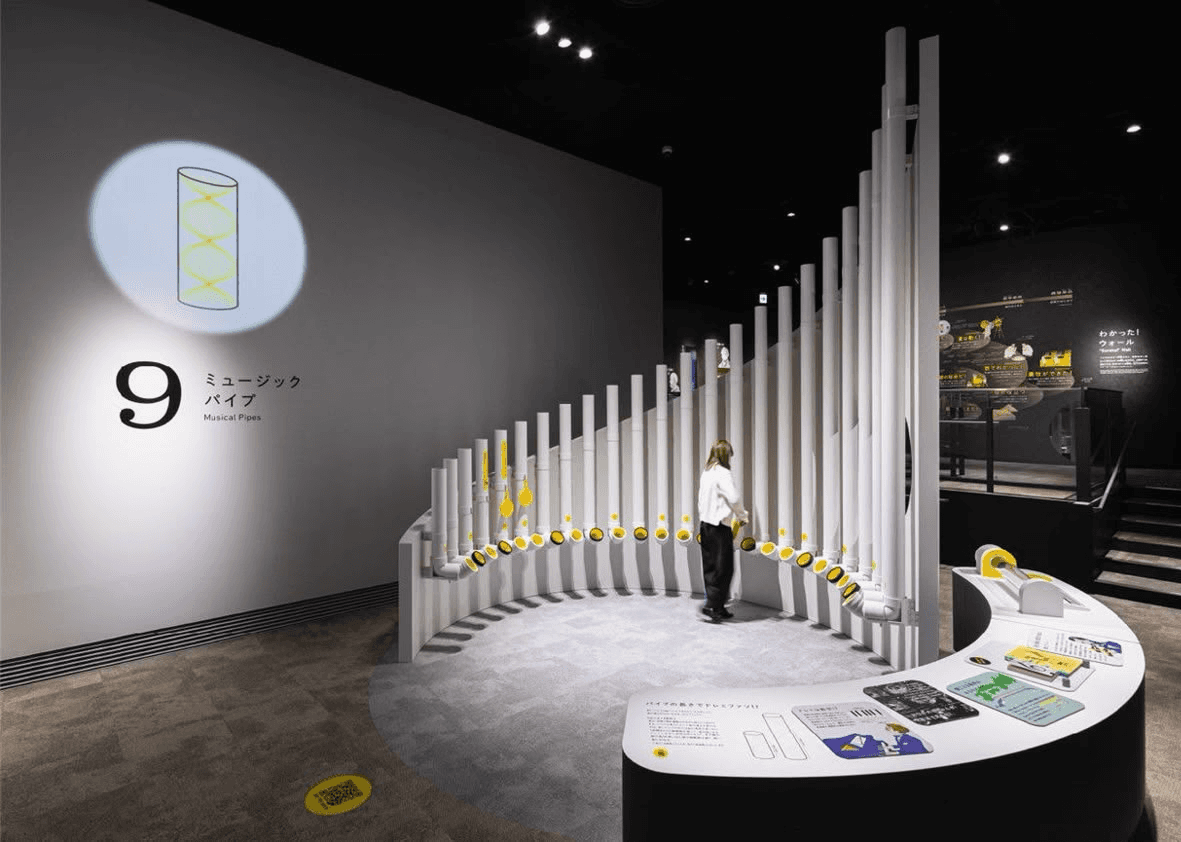
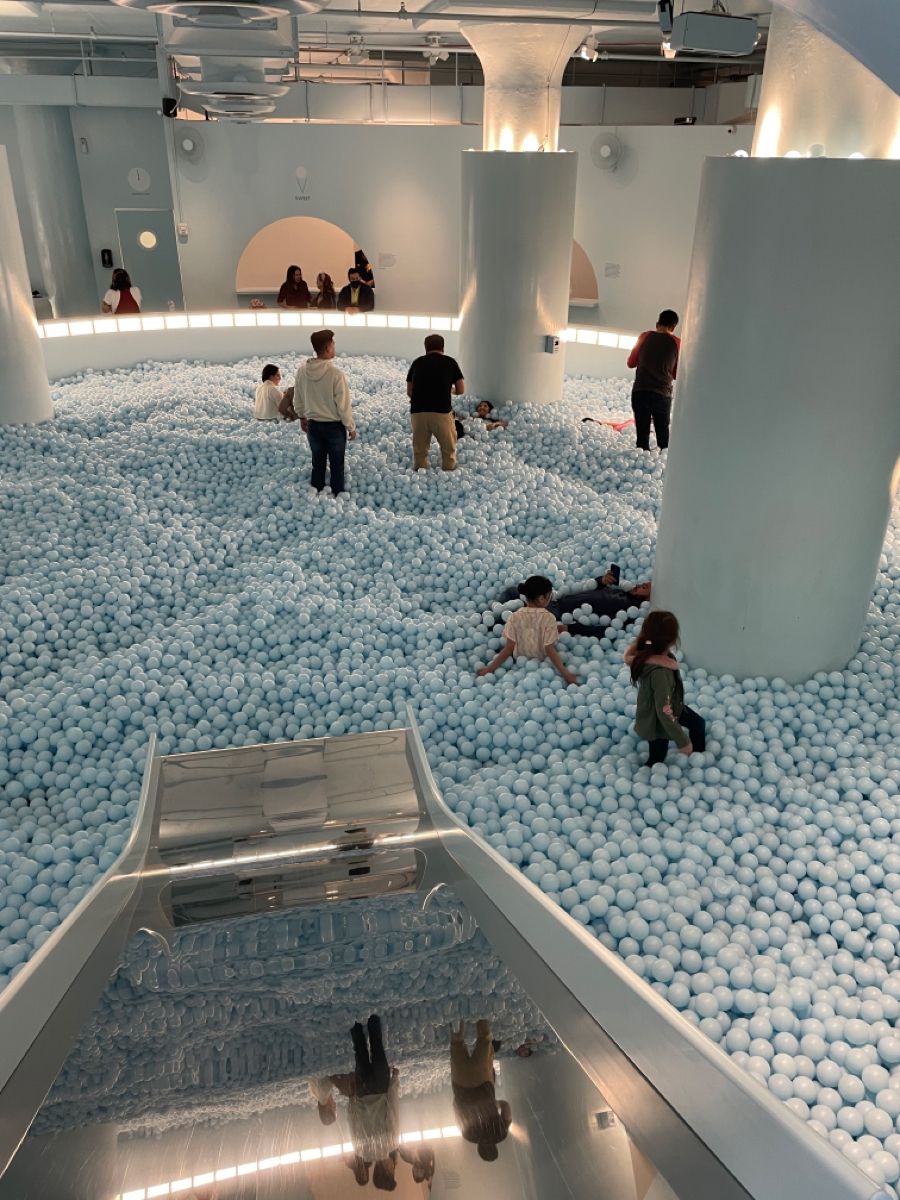
The details of these images aren't meant to be copied directly, but rather the feeling of these images together. Key ideas include: interactive, immersive, playful, informational, experimental, memorable.


Sound Waves in Virtual Reality
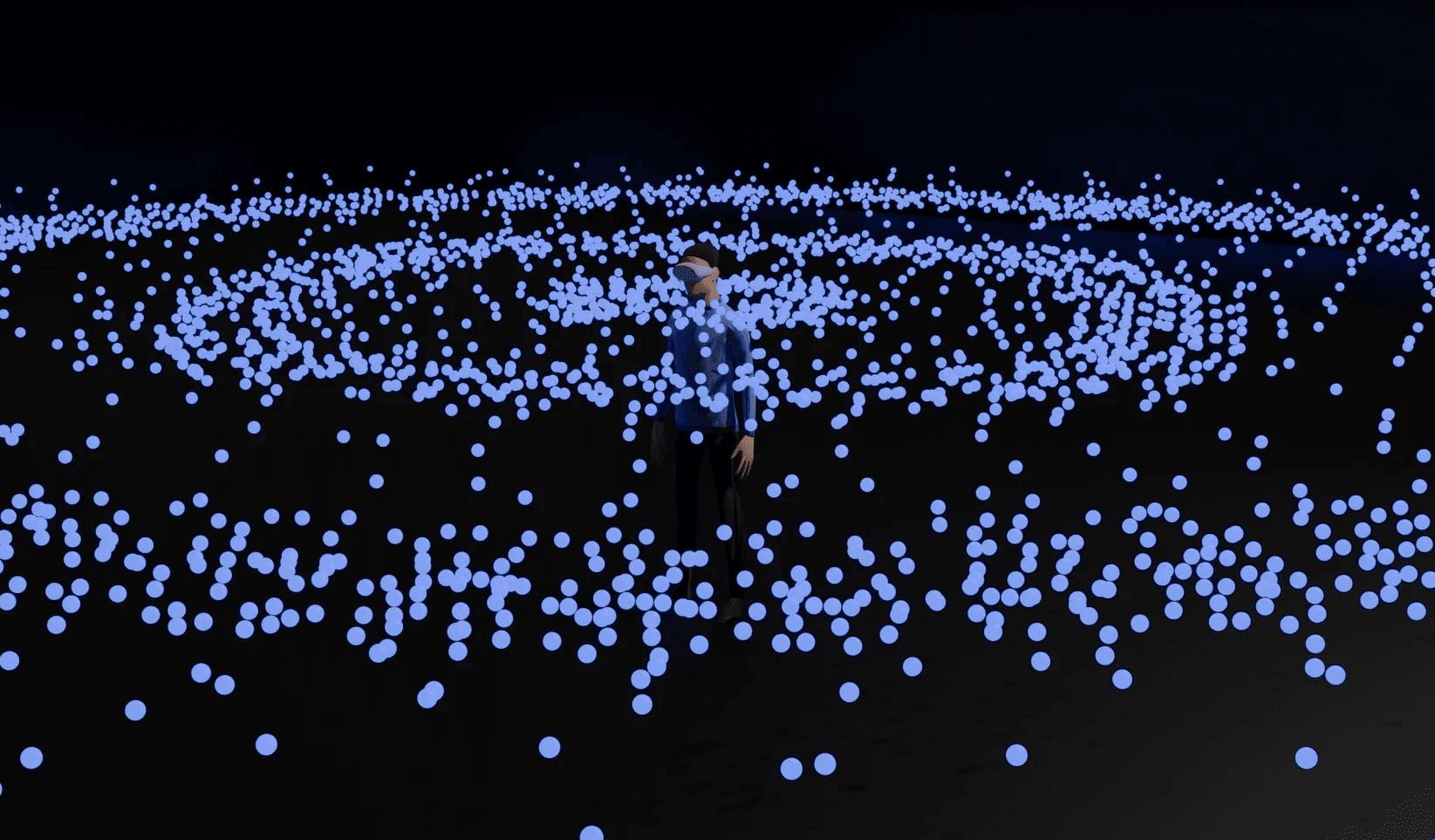
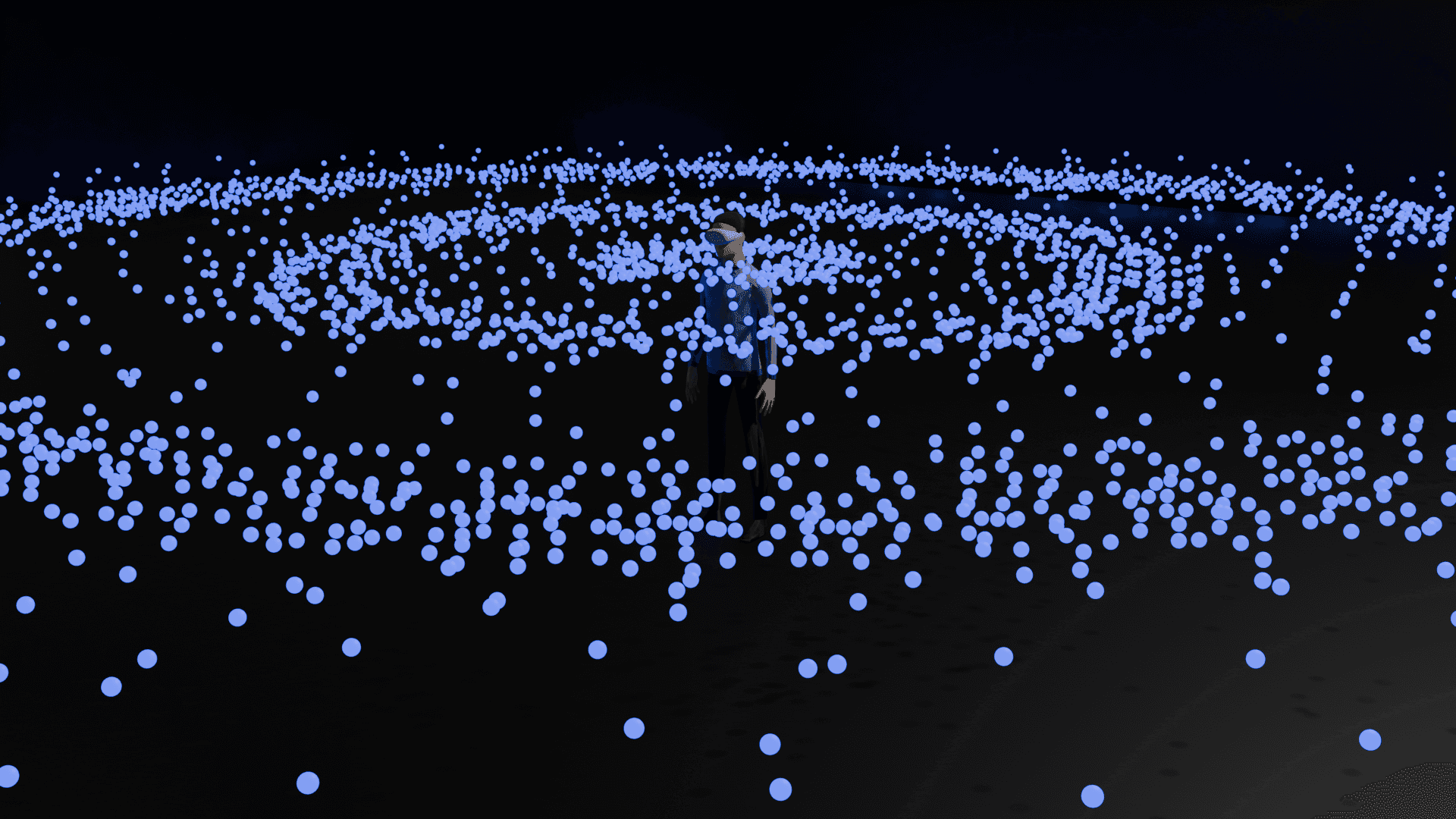
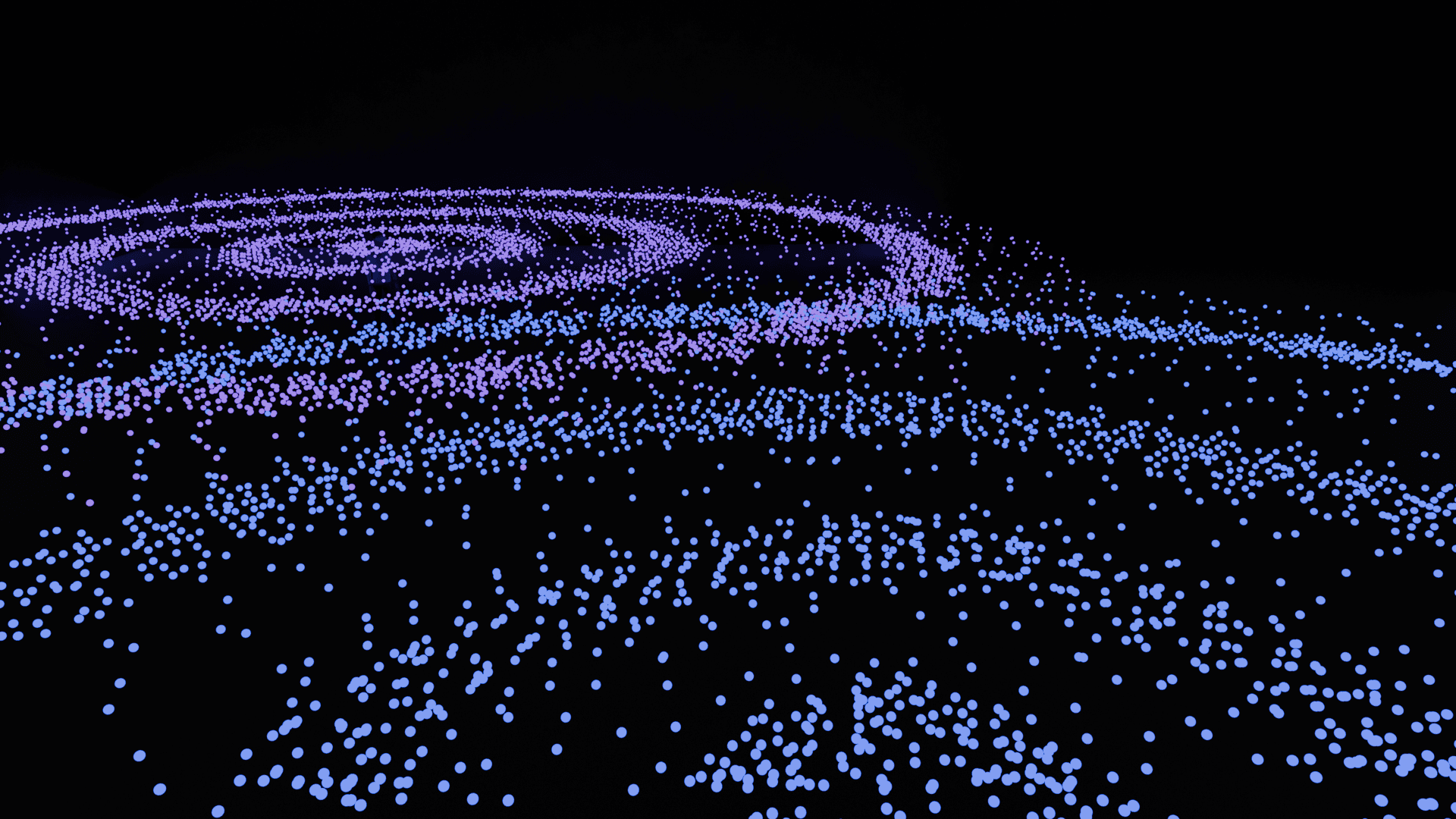
In this virtual reality environment, guests can use their voice to create their own sound waves that move outward from the guest. When multiple guests use the headsets, they see each other and the sound waves that each person creates. Air particles are represented by the glowing orbs that move away from the user on a single flat plane. This allows the user to clearly visualize sound as a longitudinal wave pattern. The visuals are meant to be memorable, allowing the guest to easily recall the orbs when thinking about sound waves at a later time.
Takeaway
This project has seen many of iterations, from full exhibitions about communication technology to interactive playgrounds of instruments. Each time I revisit this project I know more about the topic than I did before, which makes me excited to keep expanding it to cover more topics. For example, I'd love to explore the mechanics of sound technology, like speakers and microphones, to create an interactive exhibit that shows how speakers and microphones have similar inverse functions.
This project has helped me realize how important it is to have a hundred ideas before you're able to have one idea that really works. An unintended consequence of continuously building on previous concepts is that each existing concept gets muddled down with the addition of a new concept. While I'm excited to keep falling down rabbit holes, I realized it was important to edit down my exhibit to one strong idea rather than dozens that get lost among each other.